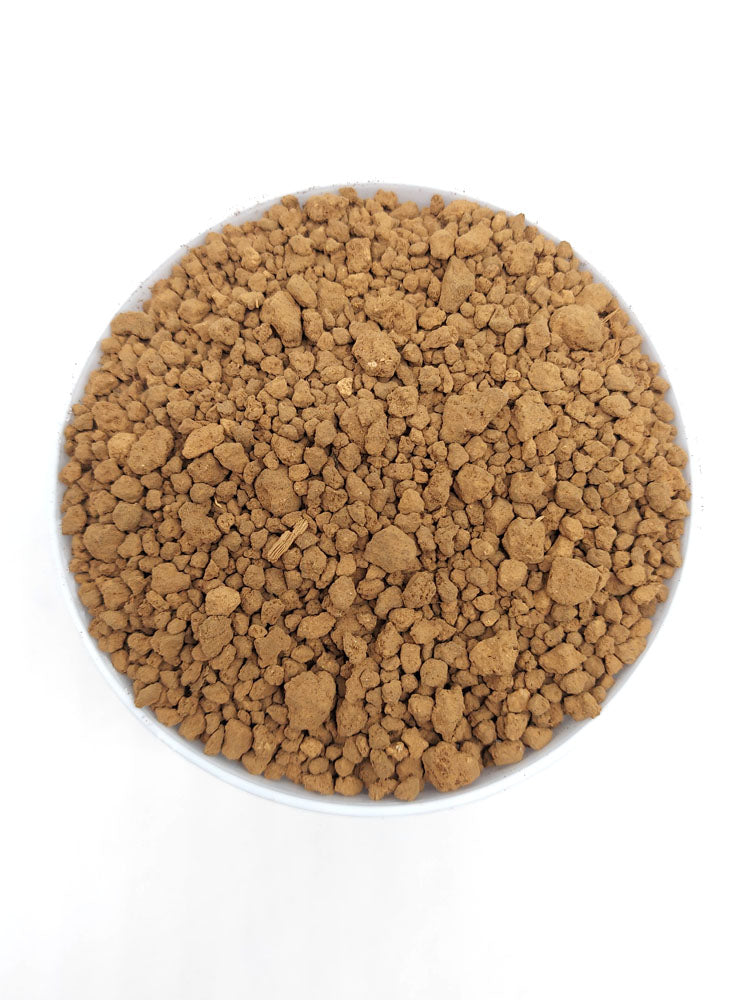

Akadama hard quality Ibaraki 2-5 mm
Akadama hard quality Ibaraki 2-5 mm
1 liter of Akadama
Akadama can be mixed with pumice, volcanic lapilli, zeolite, and perlite to enrich the substrate with nutrients and make it more similar to the natural characteristics of the plants' habitat, or it can be used pure as the sole component of the soil.
• provides the right balance of water, air, and nutrients;
• retains water for a long time without soaking the roots. When the color returns to yellowish-reddish, it's time to water again;
• contains enormous quantities of minerals due to its volcanic origin.
• retains water for a long time without soaking the roots. When the color returns to yellowish-reddish, it's time to water again;
• provides the right balance of water, air, and nutrients;
Further tips for a suitable soil formula:
• drainage should vary from species to species; it is therefore important to also consider the environmental conditions in which our bonsai lives;
• the ideal soil should be adequately aerated to allow oxygen circulation and retain enough water to meet the plant's water needs between waterings;
• plants live in symbiosis with mycorrhizae. It is therefore useful to spread a thin layer of native soil in direct contact with the underside of the roots;
AVERAGE CHEMICAL ANALYSIS
Oxygen (O): 54.34%;
Silicon (Si): 15.99%;
Aluminum (Al): 13.91%;
Phosphorus (P): 0.10%;
Potassium (K): 0.63%;
Magnesium (Mg): 0.54%;
Iron (Fe): 7.68%;
Calcium (Ca): 0.11%;
Manganese (Mn): 0.30%;
Titanium (Ti): 0.62%;
Sulfur (S): 0.23%;
Sodium (Na): 0.34%;
Carbon (C): 5.80%.